




You will walk away knowing why the things you prayed for start to feel ordinary, and how to steward them well.
QUICK ANSWER
Taking blessings for granted is what happens when an answered prayer becomes your new baseline and you stop feeling the contrast between life before and life now. The fix is not more emotion. It is stewardship: accurate remembering, steady attention, and the character to hold what you were given without gripping it.
She and I have talked about this more than once. In so many ways, we got what we prayed for.
We both have old notes, cards, and written prayers describing the kind of relationship we hoped God would bring into our lives. When we hold those prayers next to the life we are living now, the similarities are humbling.
I have watched capable leaders, myself included, slide into taking blessings for granted. Not out of ingratitude. Out of familiarity. You pray for the marriage, the company, the pulpit, the roster spot, the healthy child. You wait for it. You work for it. You cry over it.
Then it arrives, and somewhere along the way the miracle quietly becomes Monday morning. The beautiful house becomes the house. The breakthrough becomes the new monthly number.
Here is the line I cannot shake. Receiving an answered prayer is one thing. Stewarding it well is another.
Why Do We Take Answered Prayers for Granted?
The human nervous system adapts. Before we have something, our attention organizes itself around its absence. We notice the empty chair, the financial pressure, the loneliness.
Then the answer comes, and the contrast is enormous. Gratitude shows up almost on its own.
But human beings are adaptation machines. What was once extraordinary slowly becomes the baseline. Psychology calls part of this hedonic adaptation. Spiritually, I think there is a plainer word for it. We forget.
The blessing did not get smaller. Our awareness of the blessing got quieter.
Underneath that, our reference point moves. Once we reach the thing we prayed for, we stop comparing today with the season before the breakthrough. Instead, we compare it with the next possible thing.
The founder who prayed for a million-dollar company starts measuring himself against the one doing ten million. A pastor who prayed for a full room starts counting empty seats. The athlete who prayed to make the roster starts resenting her minutes.
Nothing got worse. The comparison point changed.
That drift often traces back to Insecurity, one of the 5 Constraints I teach inside the Integrated Alignment Method™. Insecurity whispers that what you have is not enough, because you are not enough yet. So you keep reaching, and the gift in your hands goes invisible.
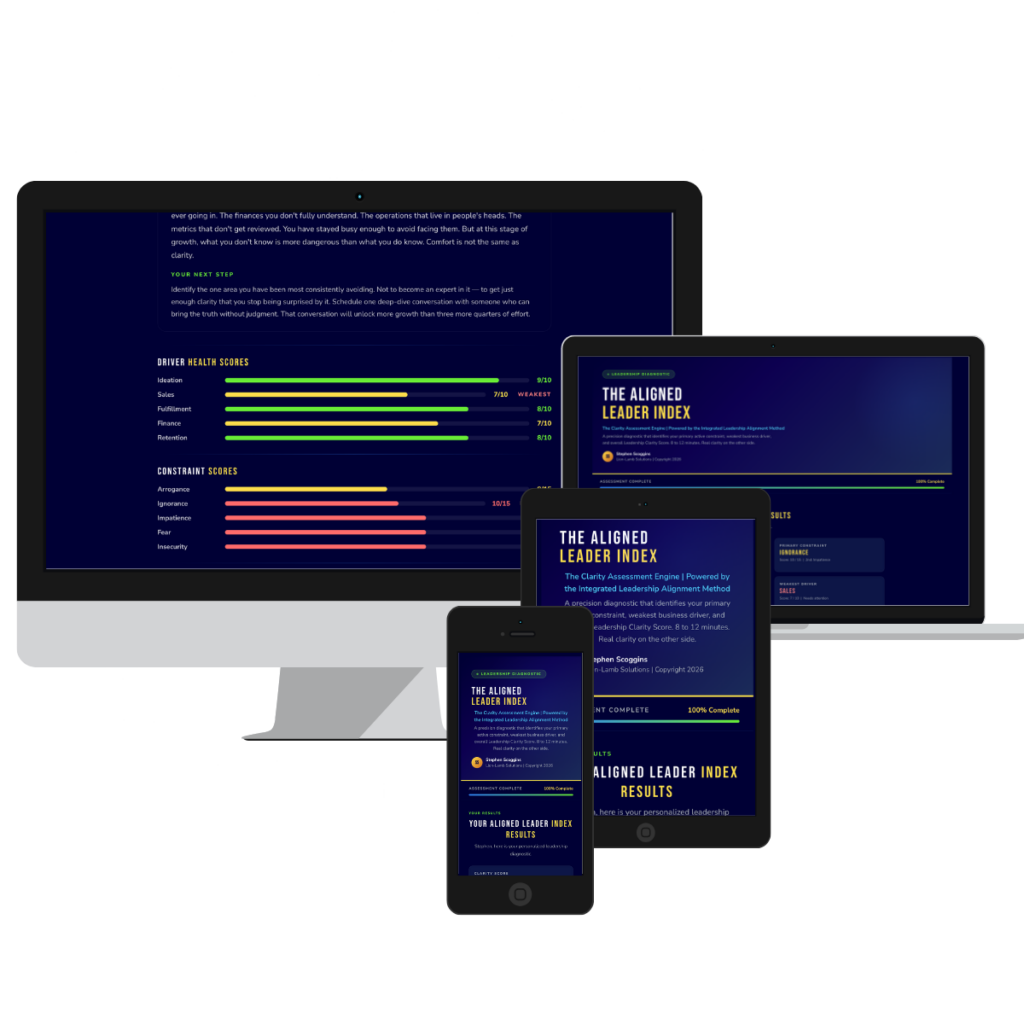
If you want to see what is quietly shaping your view right now, take the free Integrated Leaders Index Assessment.
Sometimes Wanting Feels Safer Than Having
Here is the truth most of us would rather not say out loud. Sometimes we take an answered prayer for granted not because we are ungrateful, but because we are uncomfortable receiving it.
If you have spent decades surviving, proving, rescuing, or waiting, struggle becomes familiar. Striving gives you a job. Longing gives you direction. Chaos gives you something to solve.
I know that language. When you experience homelessness as a teenager, survival becomes your native tongue.
Then God gives you something good. Peace. Love. Enough.
Suddenly there is nothing to chase in that area of your life.
For a nervous system trained on pursuit, receiving can feel strangely vulnerable. So we build another mountain. Another goal, another purchase, another problem, another reason why what we have is not quite enough.
Wanting can feel more familiar than having.
That may be one of the great maturity tests of life: can I receive something good without needing to improve it, control it, or fear losing it?
Can I simply receive?
This is not just a founder problem. I see it in the athlete who cannot enjoy the win because film review starts tomorrow. Sometimes taking blessings for granted is just survival mode that never heard it was safe to rest.
What Does It Mean to Steward an Answered Prayer?
Stewarding an answered prayer is the ongoing work of holding a gift with gratitude and responsibility, without worshiping it, neglecting it, or gripping it.
That sits right on top of Stewardship vs Control, a principle at the center of the Integrated Alignment Method™. Stewardship is what I carry. Control is what I release. The anchor question is always the same: what is mine to carry, and what is not?
Here is what I have learned. We often pray for the gift without realizing it will require new character from us.
| We pray for | And it requires |
|---|---|
| Wealth | Stewardship |
| Influence | Humility |
| Children | Sacrifice |
| Marriage | Choosing |
| Opportunity | Discernment |
| Freedom | Responsibility |
Read that list slowly. If you have been taking blessings for granted, the gap is usually in the right column, not the left.
Someone close to me wrote something in her journal that captures this beautifully. There is work that belongs to me. There is work that belongs to her. And there is work that belongs to the relationship.
That is stewardship in plain language. Stephen remains responsible for Stephen. She remains responsible for herself. But there is also an “us” that deserves intentional care.
Now watch the trap on the other side. Once we see how valuable something is, Fear can step in. We tell ourselves we are protecting the blessing when we are actually gripping it. Are we okay? Are we connected enough? Could something change?
That is not stewardship. That is fear wearing gratitude’s clothing.
Healthy protection is far more ordinary. Tell the truth. Stay curious. Put the phone down. Repair quickly. Say thank you.
As I write in the book, you are not the source. You are the steward. And the moment you stop confusing the two, everything changes.
NEXT STEP
Not sure whether you are stewarding or gripping right now? take the free Integrated Leaders Index Assesment and see where your alignment is strong and where it is slipping.
Walk It Out: The Mature Integrated Lion and Lamb
The Mature Integrated Lion would proceed by refusing to let the gift drift into the background. Lion energy here is not louder ambition. It is decisive attention. He puts date night on the calendar before the quarter fills it. She tells the truth early instead of letting resentment compound. The Lion keeps building, but names out loud what he once prayed for, so ambition never erases memory.
The Mature Integrated Lamb would proceed by learning to receive. The Lamb slows down long enough to feel the contrast again. Instead of assuming “I already know you,” the Lamb asks a curious question: “Who are you becoming now?” The Lamb holds the gift with an open hand. No constant checking. No anxious scorekeeping. Humility here sounds like, “I did not earn all of this, and I do not have to control it.”
Together, they protect the sacred through ordinary faithfulness. They stay ambitious without becoming blind, grateful without becoming fearful, and present without becoming complacent.
Lean only Lion, and the answered prayer becomes a project to optimize. The marriage gets managed like a metric. The ministry gets measured only by attendance. Lean only Lamb, and gratitude turns passive. You avoid the hard conversation to keep the peace, and the peace slowly becomes distance.
Picture a pastor who prayed for years to lead a growing church. The Lion in him keeps casting vision. The Lamb in him walks the empty sanctuary on a quiet Tuesday and remembers when a few folding chairs felt like a miracle.
Or picture a performer who once prayed for a sold-out room. The Lion prepares for tomorrow’s show with excellence. The Lamb lets tonight’s applause land before reaching for the next stage.
That is the integrated move. The same leader in every room.
How Do You Stop Taking Blessings for Granted?
- Find one old prayer today. Pull out a journal, a card, an old note, or even a voice memo. Read it next to your current life. This takes under ten minutes, and it restores the reference point.
- Name the three kinds of work. Write down what belongs to you, what belongs to the other person or your team, and what belongs to the “us.” Then ask what is mine to carry. Most tension lives where those three get blurred.
- Pray the prayer after the prayer. Try this one: “God, develop me into someone capable of stewarding what You have given me without worshiping it, neglecting it, controlling it, or taking it for granted.” Say it out loud once each morning this week.
- Schedule one ordinary act of protection. Book the date night. Put the phone in another room at dinner. Thank the team member who was once an answered prayer. Small things keep the sacred from becoming invisible.
- Catch the moving comparison point. The next time “not enough” shows up, ask one question: compared to what? Most of the time, taking blessings for granted starts with measuring your life against the wrong picture.
GO DEEPER
If Fear or Insecurity keeps turning your blessings into burdens, take the free Integrated Leaders Index Assesment and find out which constraint is quietly running your decisions.
Key Takeaways
- Taking blessings for granted usually comes from familiarity, not ingratitude.
- Gratitude is accurate remembering, the work of restoring your reference point.
- Every answered prayer requires new character to steward it well.
- Protection is not gripping, and fear can dress itself up as gratitude.
- Answered prayers are protected on ordinary Tuesdays, not only on big days.
Before This Became Normal
Psalm 103:2 says it plainly: “Praise the Lord, my soul, and forget not all his benefits.” David was not telling himself to feel more. He was telling himself to remember.
Answered prayers are protected on ordinary Tuesdays, when someone is tired and dinner is late. On those days, I hope we remember the old notes.
Some of what I once called a prayer request, I now call my life.
So maybe the mature response is not always to ask for more. Maybe it is simply to whisper, “Thank You. Help me steward this well.”
BE THE FIRST TO KNOW
This message sits at the heart of my upcoming book, One Part Lion, One Part Lamb. Be the first to know when it releases at ONE PART LION ONE PART LAMB The Integrated Method to Rise, Lead, and Last.
Much Love & Light, God bless
Stephen
*Creative spelling and grammar compliments of Dyslexia; thank you for your patience and understanding with written replies!
Frequently Asked Questions
Mostly because we adapt. Before we have something, our attention is organized around its absence. Once it arrives, it slowly becomes the baseline, and we start comparing it with the next possible thing instead of the season before. The blessing does not shrink. Our awareness of it gets quieter, which is why intentional remembering matters so much.
Separate stewardship from gripping. Gripping sounds like constant checking and anxious scorekeeping. Stewardship looks ordinary: telling the truth, staying curious, repairing quickly, protecting time, and saying thank you. Ask what is yours to carry, do that part faithfully, and release the outcomes you were never meant to control.
Stewarding a blessing means holding a gift with gratitude and responsibility over time. Receiving often happens in a moment, but stewardship happens over a lifetime. Wealth requires generosity and wisdom. Influence requires humility. Marriage requires choosing each other again and again. The gift is the beginning of a new kind of growth, not the end of it.
Yes. The principle works for anyone who has worked hard for something and then stopped noticing it. Founders, athletes, performers, and executives all face the same moving comparison point. Write down what you once hoped for, read it beside your current life, and decide what you will intentionally protect this week.
About the Author
Stephen Scoggins is a life and business strategist for high-capacity leaders, founder of Lion-Lamb Solutions, and author of One Part Lion, One Part Lamb. After experiencing homelessness as a teenager, he went on to build and exit multiple companies, including one that reached nine-figure annual revenue. He is the architect of the Integrated Alignment Method™ and host of the Build podcast, with over 48 million views. Stephen helps founders, pastors, athletes, and leaders scale with peace and cast out chaos.