




There’s a moment in every serious entrepreneur’s life that never makes it to social media channels like Instagram, LinkedIn, YouTube, and beyond.
In Truth …
It’s not the win. It’s not the launch. It’s not the applause.
It’s the quiet, internal negotiation. You know exactly what needs to happen next. The conversation. The restructuring. The hire. The firing. The launch. The visibility play. The price increase. The pivot. You can see it clearly. In fact, you could coach someone else through it flawlessly.
And yet, you don’t move.
Instead, you clean up your inbox. You tweak the logo. You reorganize the CRM. You explore a new software stack. You revise the deck for the seventh time. Everything feels productive, but nothing actually advances the mission. I know this lesson because I have dealt with it myself for over half of my thirty years as a business owner, founder, and entrepreneur. Which is why have some powerful revelations and lessons I want to share with you.
This is where the truth hits hard: the subconscious overestimates the cost of disciplined action and underestimates the cost of staying the same.
In this article, we’ll explore:
- Why disciplined action feels emotionally expensive
- The psychological forces silently stalling high performers
- The hidden cost of stagnation in leadership and business
- A practical framework to break the negotiation cycle and move
If you’ve been stuck in productive avoidance, this is for you.
The Invisible Battlefield Behind Disciplined Action
Let’s define it clearly. When I say the subconscious overestimates the cost of disciplined action, I’m talking about a nervous system distortion. I have discovered that our brains calculate short-term emotional risk faster than long-term strategic gain.
“Subconscious overestimates the cost of disciplined action,” – Stephen Scoggins
And it does it automatically.
The Day I Realized I Was the Bottleneck
There was a season when revenue was healthy. The team was solid. From the outside, we looked strong. Internally, we had hit a ceiling. I knew what it was.It was me. I was making too many decisions. I was still in operations. I was the visionary, integrator, and firefighter all at once. I said it out loud: “I need a COO.” That was the right move. Clear as day.
But instead of hiring one, I did everything else.
- I revisited marketing.
- Adjusted pricing.
- Explored new CRMs.
- Redesigned dashboards.
- Tweaked funnels/ client journeys.
On paper, it looked strategic. In reality, it was protective.
Because hiring a real COO meant something deeper. It meant admitting I wasn’t the best operator in the room. It meant surrendering control. It meant stepping out of the hero identity. It meant I had to come to terms with the fact that my business needed operational leverage and I was going to have to let go of the internal reward of being needed and instead offer the business what it needed. “It needed real stewardship.”
Financially, it wasn’t as expensive. Emotionally, it was.
My subconscious ran a fast calculation: “If someone stronger comes in here, you lose significance.”
That wasn’t conscious. It was visceral. So instead of evolving, I optimized. Optimization feels safe. Evolution does not. And that is the tension behind disciplined leadership action.
If you are a high-performing leader, it’s not if this will become a moment of time for you, but when. My prayer for you is to learn from several of my mistakes in building and scaling businesses. I want to encourage you to know that it’s okay to admit, “I may be the bottleneck,” and that, while it may feel scary at first, it is actually freeing. It’s foreign because you finally give yourself permission to become a steward of your enterprise versus the identity that your enterprise gives you.
“In order to be a steward, you have to let go of needing feel significant from external results” – Stephen Scoggins
Stewardship says, how can I compound efforts, time, talent, and resources for the greatest good rather than what’s in it for me.
Why Disciplined Action Feels So Costly
I discovered that if you’ve ever stalled despite clarity, there are usually three forces underneath it. These driving forces show the need for true integrated alignment to remove resistance, increase authenticity, and develop truth through growth and maturity.
1. Loss Aversion
Behavioral economics shows we experience potential loss more intensely than potential gain. So when disciplined action shows up, your brain asks:
“What might I lose?”
- Control.
- Approval.
- Certainty.
- Identity.
- Belonging.
The upside might be massive. The short-term emotional risk feels heavier. Maintenance feels stable. But maintenance is often disguised stagnation. And stagnation prevents aligned integration.
“Stagnation prevents aligned integration. “ – Stephen Scoggins
2. Ego Exposure
Disciplined action almost always increases visibility. Launching exposes you to feedback. Raising prices exposes you to rejection. Delegating exposes you to comparison.
Firing exposes you to conflict. High performers rarely look lazy. They look productive.
The Truth: They just redirect effort into tasks that protect the image instead of expanding identity.
You stay busy. But you avoid the thing that stretches you. It’s the stretching that increases your character to carry the weight of your fully aligned capacity.
3. Identity Inertia
I discovered that the deepest layer. Your subconscious is loyal to your current identity, not the version of yourself you have always wanted to live and embody.
- If you’ve been the scrappy founder…
- The one who carries everything…
- The overworked operator…
- The fixer…
Then remember, real “Growth” threatens who you’ve been. So you can shift into something larger. Comfort likes who you have been, truth likes you actually are in the fullness of expansion.
- Installing systems shifts identity.
- Delegating shifts identity.
- Scaling visibility shifts identity.
The nervous system interprets identity instability as danger.
Not metaphorical danger. Biological danger. So you delay.
Not because you lack clarity. Because you’re protecting who you’ve been.
Why This Matters in Leadership and Business
Entrepreneurship and leadership is not just a strategy game. It is an identity expansion process. I learned the subconscious overestimates the cost of disciplined action precisely when growth requires you to become someone new.
Let’s connect the dots.
Character builds trust. —> Trust builds influence. —> Influence drives growth. —> Growth shapes legacy.
If you repeatedly avoid high-leverage moves, something subtle happens.
Self-trust erodes.
Every avoided action sends a message inward: “I hesitate when it matters.”
Over time, that becomes identity.
- Burnout sets in.
- Resentment builds.
- Clarity fades.
- You feel busy.
- You feel tired.
- You can’t point to one catastrophic event.
It’s accumulated avoidance. And that avoidance is costly. What if you commit to yourself for the next 30 days to do the hard things first, setting up everything behind it so it falls into place? As we do hard things first, we remove resistance, build self-trust, and, most of all, turn stagnation into integration that leads to expansion.
Stagnation accrues interest.
“Discipline is rarely about effort. It’s about identity expansion.”
— Stephen Scoggins
The leader who won’t confront underperformance damages culture. The visionary who won’t launch loses momentum. The founder who won’t delegate becomes the ceiling.
Staying the same is not neutral. It’s expensive.
A Practical Framework to Break the Negotiation
You do not overcome this by yelling at yourself. You overcome it with regulated courage.
Here’s how.
A) Step One — Name the Avoided Move
Ask yourself directly: “What action am I actually avoiding?” Not the ten surface tasks. The real one. Write it down clearly.
B) Step Two — Expose the Fear Narrative
Ask: “If I take this action, what do I believe might happen?”
Write it raw.
- “If I hire a COO, I’ll lose control.”
- “If I launch and it flops, I’ll look foolish.”
- “If I fire them, they’ll hate me.”
- “If I fire them, I will have to do it all myself and I am already exhausted.”
- “If I go bigger, people will judge me.”
I have been there myself…
Then ask: Is that objectively true? Or is it a protective narrative? Most of the time, it’s narrative.
C) Step Three — Reduce to the Smallest Courageous Step
Do not conquer the mountain.
- Schedule the meeting.
- Send the draft.
- Post the date.
- Write the job description.
Small. Clean. Clear. Set a short execution window. Move before overthinking escalates.
D) Step Four — Regulate, Then Act
Ground yourself physically.
- Slow breath.
- Stable posture.
- Clear environment.
Then act while calm. Confidence is not built by thinking about growth.
It’s built by surviving it.
- You take the step.
- You survive.
- Your nervous system recalibrates.
Now disciplined action feels less threatening.
Remaining stuck starts feeling worse.
That is the shift.
What Happens If You Ignore This?
If you continually allow the subconscious to overestimate the cost of disciplined action, here’s what unfolds.
- Business stagnation.
- Leadership erosion.
- Emotional burnout.
- Reputation drift.
You plateau quietly.
- You refine.
- You optimize.
- You stay busy.
But you do not expand.
And high-capacity leaders feel that gap deeply. The danger of stall is that it looks respectable. But legacy is not built through maintenance. It is built through mature expansion.
The Call to Mature Leadership
The subconscious overestimates the cost of disciplined action. It tells you growth is dangerous. It tells you visibility is risky. It tells you that change threatens safety.
But the real threat is stagnation.
- Integrity over optics.
- Alignment over comfort.
- Character over protection.
The next time you feel pulled toward productive distraction, pause.
Ask: “What am I actually avoiding?”
Name it. Isolate the fear. Take the smallest courageous step. Move before resistance compounds. That is how identity evolves. That is how leaders mature That is how momentum becomes embodied.
And eventually, something shifts. Disciplined action stops feeling terrifying. Remaining stuck does.
That is when real leadership begins.
Take a Closer Look
If this message resonates and you want to go deeper into alignment, leadership growth, and integrity-driven influence, take a Closer Look → LINK HERE
Not Sure Where You Are in Your Leadership Journey?
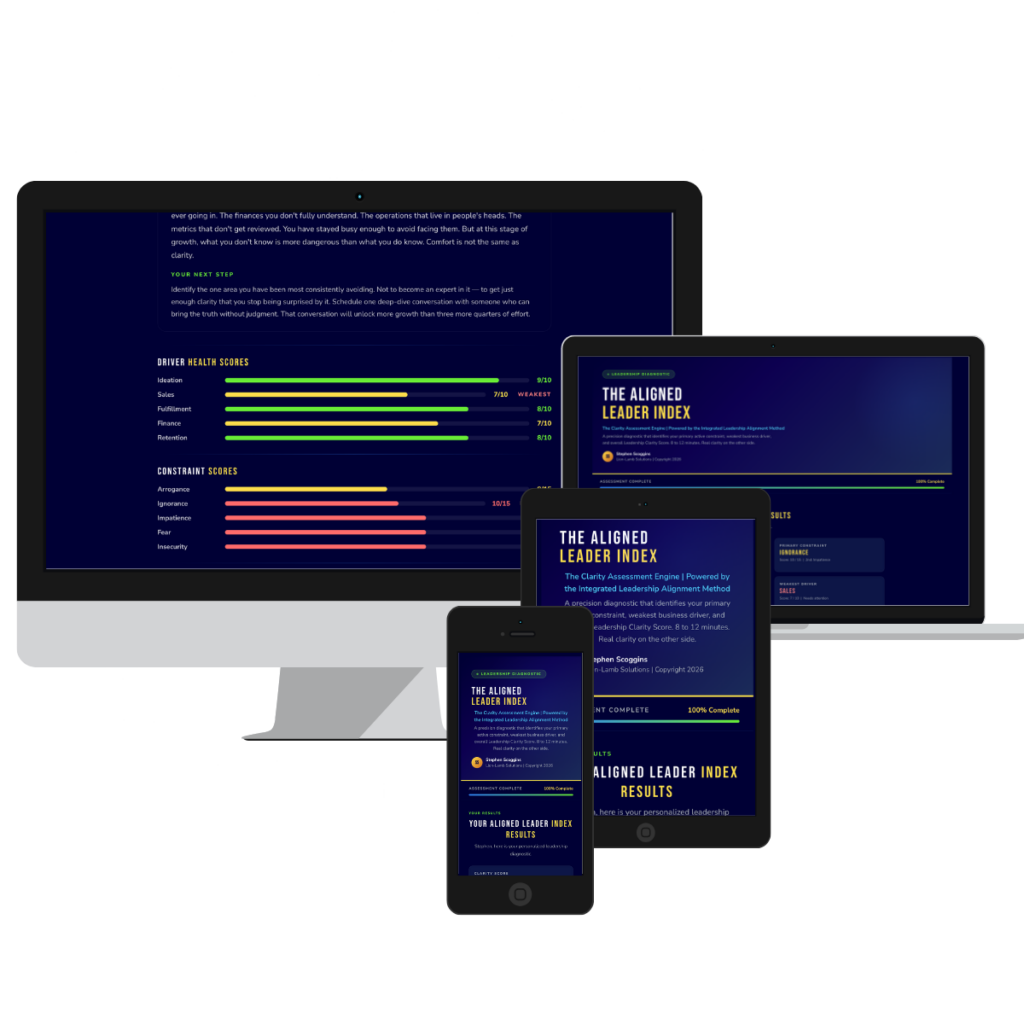
If you’re unsure whether you’re operating from clarity or protection, take the Integrated Leaders Assessment.
It will help you understand:
Where you’re currently avoiding expansion
What needs to shift
How to shift it strategically
👉 Take the Integrated Leaders Assessment now.
Frequently Asked Questions
FAQ 1: Why does the subconscious overestimate the cost of disciplined action?
Because the nervous system prioritizes short-term emotional safety over long-term strategic gain. It interprets identity shifts, visibility, and confrontation as potential threats. This distortion makes growth feel more dangerous than stagnation.
FAQ 2: How do I know if I’m procrastinating or protecting myself?
Look at the pattern. If you consistently avoid high-leverage actions while staying busy with low-risk tasks, it’s likely protection. Procrastination avoids everything. Protection redirects effort away from identity-expanding moves.
FAQ 3: Why does staying the same feel safe even when I know it’s not?
Familiarity feels stable to the brain. Even if your current level limits growth, it is known territory. The subconscious prefers known discomfort over unknown expansion.
FAQ 4: What is the first practical step to break this cycle?
Identify the exact move you’re avoiding and reduce it to the smallest courageous action. Regulate your nervous system, then execute quickly before mental resistance builds. Repetition rewires identity.
If you enjoyed this artical please check out this one HERE